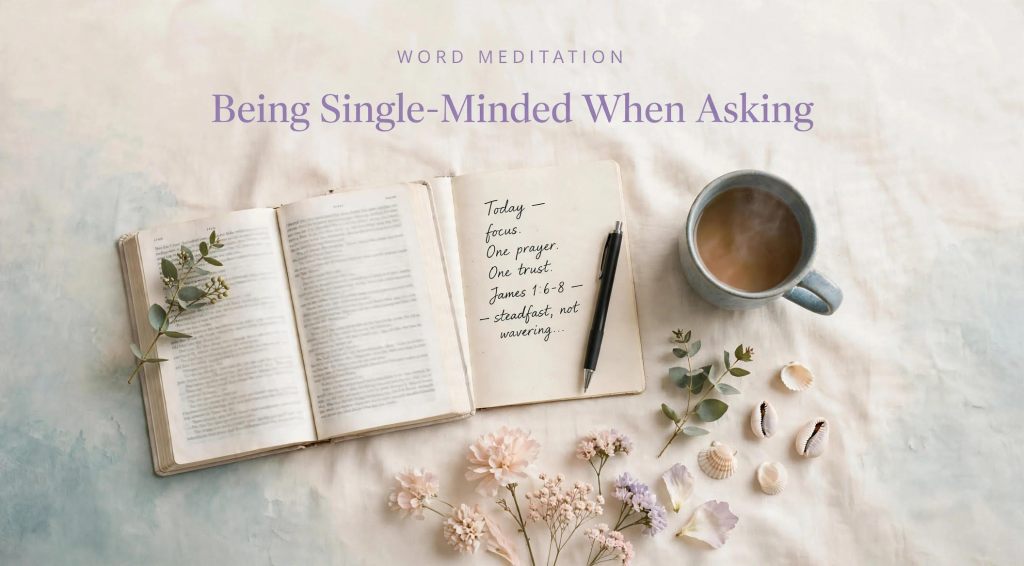
During my morning Word reflection, the Holy Spirit kept opening my eyes to some bits in Scripture that stood out to me. I felt led to share some of these reflections here on The Wholesome Space, and that is how this new series, Word Meditation, came about.
In this series, we will take time to reflect on Scripture, explore what it reveals to us about God, and consider how we can apply His Word to our everyday lives.
For this meditation, let us look at the book of James
“If you need wisdom, ask our generous God, and he will give it to you. He will not rebuke you for asking. But when you ask him, be sure that your faith is in God alone. Do not waver, for a person with divided loyalty is as unsettled as a wave of the sea that is blown and tossed by the wind. Such people should not expect to receive anything from the Lord. Their loyalty is divided between God and the world, and they are unstable in everything they do.” James 1:5–8 (NLT)
A Generous Father
The first thing that stands out to me in this passage is the invitation to ask God for wisdom. James presents our Father as generous, ever willing to give to those who ask Him. We do not have to strive to earn His generosity, nor should we feel embarrassed to approach Him when we lack wisdom.
This reminds me of King Solomon, who asked God for wisdom and understanding in 1 Kings 3:9. When I read this account, I can almost imagine God’s delight in Solomon’s request. He could have asked for many things, but he asked for the wisdom needed to lead God’s people well and In 1 Kings 3:10, we are told that the Lord was pleased with his request.
What a beautiful thing it is to know that we can approach God when we recognise our need for wisdom. We do not have to pretend to know everything or have all the answers. We can simply come to Him, ask, and trust Him to give generously.
As believers, we should continually seek the wisdom that comes from God. We need it to navigate life’s decisions, discern His direction and live in a way that honours Him.
Although James specifically speaks about asking for wisdom, the principle of approaching God with faith also challenges us in other areas of prayer. Whether we are asking for guidance, provision or healing, we must learn to trust God’s character and wisdom, even when we do not yet understand how things will unfold.
Asking in Faith
Hebrews 11:6 tells us that without faith it is impossible to please God. When we come to Him, we must believe that He exists and that He rewards those who earnestly seek Him.
One of the ways we can strengthen our faith is by immersing ourselves in His Word and reflecting on His faithfulness. As we read Scripture, we are reminded of who God is, what He has done and the promises He has made. We learn to anchor our trust in His character rather than in what our circumstances seem to be telling us.
Back to our Scripture, James 1:6 tells us that when we ask God, our faith must be in Him alone. We are not to be tossed about by divided loyalty, constantly shifting between trusting God and placing our confidence in what we see around us.
In my walk with God, I have come to realise how easily what we see with our physical eyes can influence what we believe. Sometimes, we pray fervently about a situation, yet instead of seeing it improve, we watch it get worse. The very thing we are praying about can begin to dominate our thoughts, stir our emotions and challenge our confidence in God.
Oh, that we would learn to look beyond what is visible and seek to see our situations through the lens of God’s Word and what He is doing!
This brings to mind an account in 2 Kings 6:15–17.
When Elisha and his servant were surrounded by an enemy army, the servant was afraid. Elisha, however, reassured him that those who were with them were more than those who were against them. He then prayed:
“Open his eyes, Lord, so that he may see.”
The Lord opened the servant’s eyes, and he saw the hills full of horses and chariots of fire all around Elisha (2 Kings 6:17, NIV).
What a moment that must have been! The circumstances had not changed before the servant’s eyes were opened. The enemy was still there, but he was now able to see what he had not seen before.
This account reminds us that there may be more at work than we can presently perceive. We need God’s wisdom to help us navigate what we see, and we need to keep our confidence in Him even when the way forward is unclear.
Let us always learn to pray for wisdom and discernment, asking God to help us see our circumstances in the light of His truth rather than allowing fear to shape our understanding of them.
Tossed to and Fro
James uses the picture of a wave being blown and tossed by the wind to describe a person who wavers when asking God. He goes on to speak about divided loyalty and instability.
I find this imagery striking because it makes me think about how easily our confidence can be shaken when we are faced with uncertainty or when the situation we are praying about seems to get worse.
On one hand, we say that we trust God. We pray, believe His Word and look forward to what He will do. On the other hand, when our circumstances do not change as quickly as we hope, we become consumed by fear, doubt and discouragement. Our confidence begins to rise and fall with what we see.
We must, however, understand that experiencing fear or discouragement does not automatically mean that we have no faith. Even in difficult moments, we can bring our feelings honestly before God. The question is whether we allow those feelings to determine where we place our trust.
Are we looking to God for wisdom while we navigate uncertainty, or are we allowing the uncertainty itself to dictate what we believe about Him?
This is why the instruction in James is so important. Being single-minded does not mean that we never have questions or that we must pretend to be unaffected by life’s challenges. Rather, it calls us to remain anchored in God instead of being divided in our allegiance to Him.
A Steadfast and Undivided Heart
The Word of God describes faith in Hebrews 11:1 as the substance of things hoped for and the evidence of things not seen. This is the kind of faith that calls us to trust God even when what we see with our physical eyes seems contrary to what we are believing Him for.
We are created in God’s image, and as His children, we are called to live by faith, not to be intimidated by the situations we face. Rather than allowing our circumstances to dictate our expectations, we must learn to stand on God’s Word and declare His counsel over the matters we bring before Him.
The next time we bring a matter before God, let us remember that He is pleased when we approach Him in faith, trusting in who He is and what He has said in His Word. Our emotions may fluctuate, and our circumstances may change, but our confidence in Him must remain steadfast.
If God has spoken concerning a matter in His Word, ours is to hold on to His Word, meditate on it, and continue to declare His truth over that situation. We must not allow what we see to make us waver or cause us to abandon what we know to be true about Him.
This is why we must be single-minded when we ask. We should not allow our hearts to be divided between what God has said and what our circumstances seem to be saying. We must learn to keep our eyes fixed on Him, trusting His wisdom and remaining steadfast in faith.
A moment to reflect: When you bring a matter before God, are you allowing what you see to influence your faith, or are you standing firmly on His Word? What can you begin to do differently to keep your heart anchored in Him?






Leave a Reply